
Search Pennsylvania Bench Warrants
Pennsylvania bench warrants are court orders issued when a person fails to follow a judge's directive. They are most often tied to missed court dates or unpaid fines and costs. Courts across all 67 Pennsylvania counties issue bench warrants through the Court of Common Pleas and Magisterial District Courts. If you need to search for bench warrants in Pennsylvania, several tools are at hand. The Pennsylvania Unified Judicial System web portal gives access to case records and warrant data from courts statewide. You can also contact your local county sheriff's office or clerk of courts for bench warrant details in Pennsylvania.
Bench Warrants in Pennsylvania
A bench warrant in Pennsylvania is a legal order from a judge. It is not the same as an arrest warrant or a search warrant. Arrest warrants come from criminal probes where law enforcement has probable cause. Search warrants let officers look through a place for proof of a crime. Bench warrants focus on one thing: a person did not do what the court told them to do. Under 234 PA Code Rule 430(B), judges issue bench warrants when someone fails to comply with a court directive, such as missing a hearing or not paying ordered fines.
The legal process behind bench warrants in Pennsylvania starts when a judge finds that a person has not met a court order. Common reasons include missed court dates, unpaid fines, and broken probation terms. Once a bench warrant goes active, law enforcement can make an arrest at any time. These warrants stay in force until the court pulls them back or the named person shows up before a judge in Pennsylvania.

Bench warrants can lead to more than just an arrest. Courts may add new fines. A judge might revoke bail. Contempt charges are also possible. Acting fast is the best way to deal with a bench warrant in Pennsylvania. Reaching out to the court or working with a defense lawyer can make a real difference. Judges often view a willing return to court as good faith, which may lead to a lighter outcome for people with outstanding bench warrants in Pennsylvania.
Pennsylvania Bench Warrant Laws
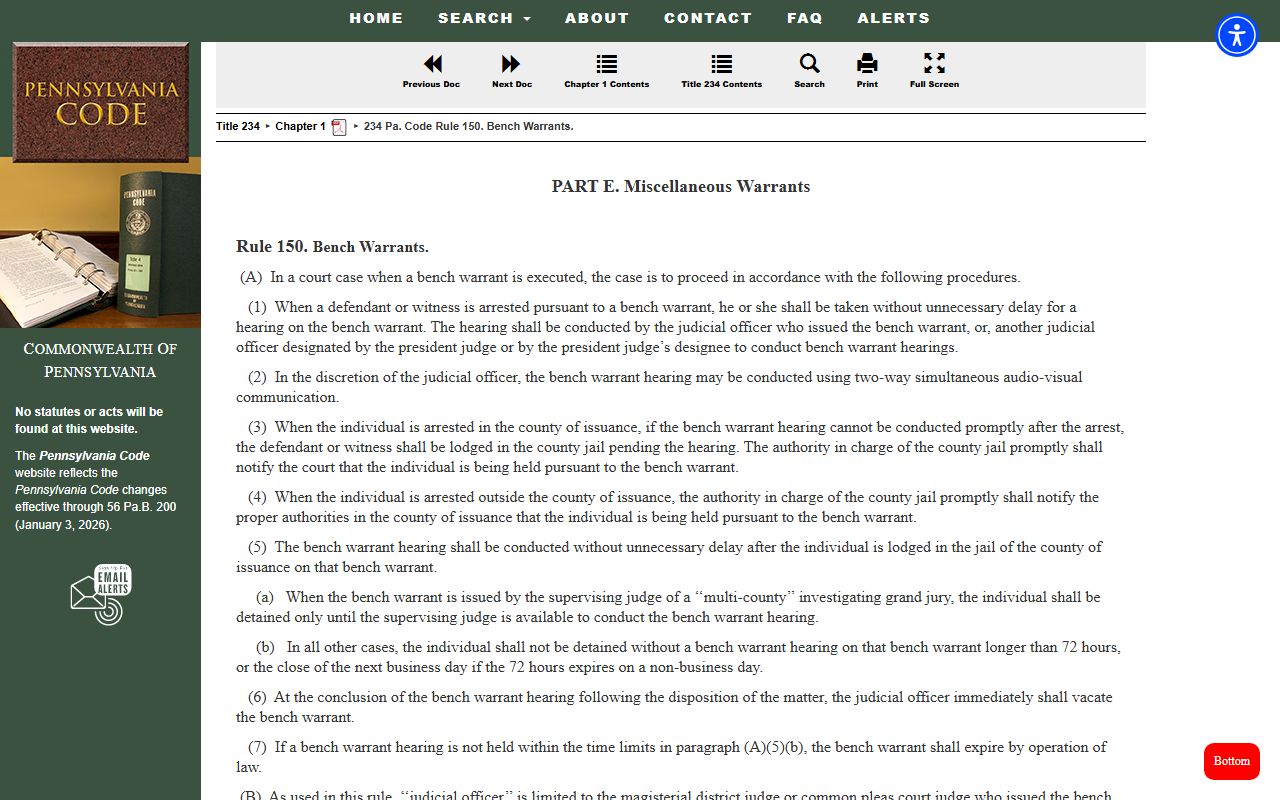
Several rules in the Pennsylvania Code govern bench warrants. 234 PA Code Rule 150 sets the core rules for bench warrant hearings. Under this rule, a person arrested on a bench warrant must be taken before a judicial officer without needless delay. If the hearing cannot take place right away, the person is held in the county jail. The jail must tell the court that it is holding someone on a bench warrant. In all cases, a bench warrant hearing must happen within 72 hours. If that time passes with no hearing, the bench warrant expires by law in Pennsylvania.
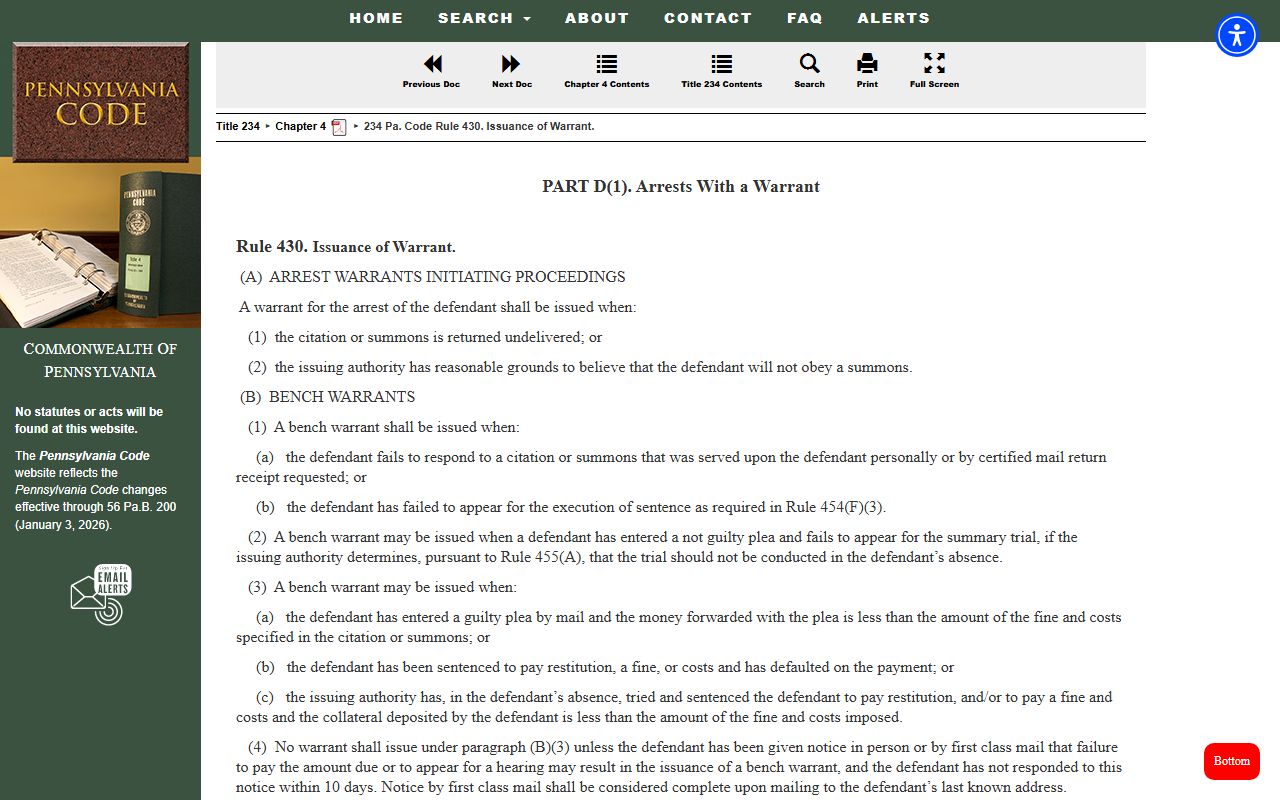
For summary cases, 234 PA Code Rule 430 spells out when a bench warrant can be issued in Pennsylvania. A bench warrant shall be issued when a defendant fails to respond to a citation or summons served in person or by certified mail. It may also be issued when fines or costs go unpaid. The court must first send notice by mail or in person. The defendant then has 10 days to respond. If they do not, the judge may issue a bench warrant.
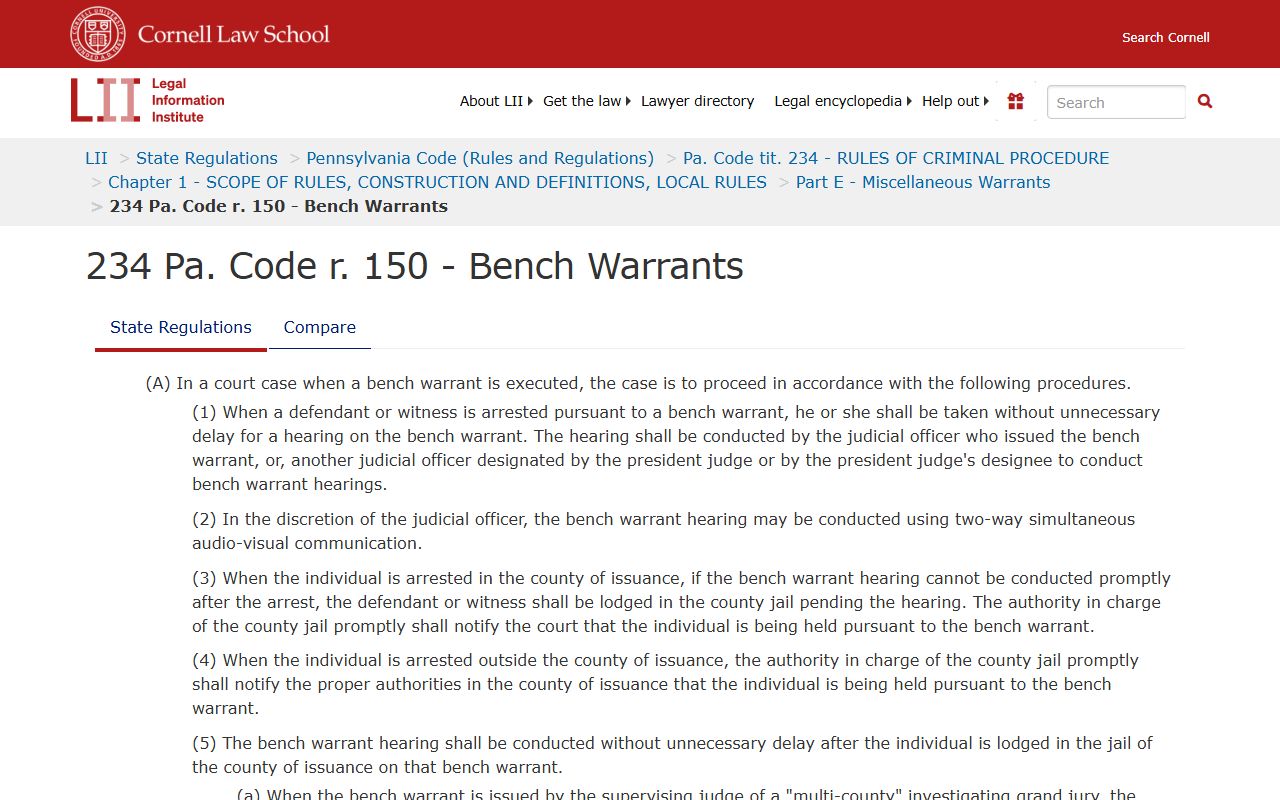
The Legal Information Institute at Cornell Law keeps a public copy of Pennsylvania Rule 150 as well. This is a helpful tool for anyone who wants to read the full text of the bench warrant rules that apply across all 67 counties in Pennsylvania.
Note: Bench warrant hearings in Pennsylvania may be held by two-way audio-visual link at the judge's discretion under Rule 150.
Search for Pennsylvania Bench Warrants
The Pennsylvania Unified Judicial System web portal is the main tool for looking up court records in the state. It gives access to docket sheets from the Court of Common Pleas and Magisterial District Courts in all 67 counties. You can search by name, case number, or offense tracking number. The portal also offers the PAeDocket app for fast searches on a phone or tablet. Public docket sheets show case status, charges, and court events for bench warrants filed in Pennsylvania.
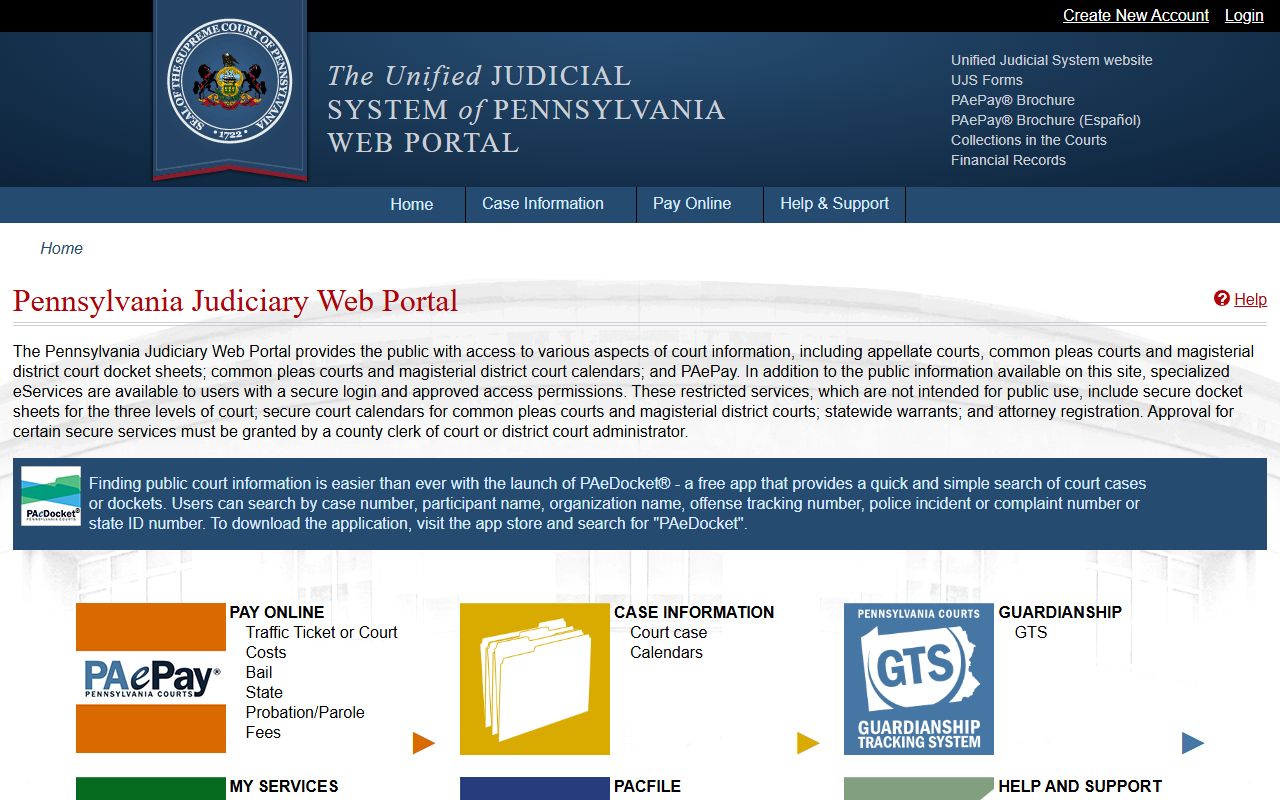
Users with secure login and approved access can view statewide bench warrant data through the portal. For the general public, docket sheets show whether a case has an active warrant. Bench warrants stay active until the named person appears or the court pulls them back. There is no set date when they expire on their own in Pennsylvania.
Other ways to check for bench warrants in Pennsylvania include:
- Call the county sheriff's office where the case was filed
- Visit the clerk of courts at the local courthouse in person
- Request a criminal history check through the Pennsylvania State Police PATCH system
- Search case records through the PAeDocket mobile app
Note: Asking about bench warrants in person at a police station in Pennsylvania may lead to arrest if one is found active in your name.
Pennsylvania Bench Warrants in Domestic Cases
Bench warrants also arise in domestic relations matters in Pennsylvania. PA Rule 1910.13-1 governs bench warrants for child support and spousal support cases. When a party fails to show up for a scheduled conference or hearing after proper notice, the court may issue a bench warrant. The domestic relations office must file the request within 60 days of the missed date. Under Pennsylvania support law at 23 Pa.C.S.A. Section 4353(a), parties must report any change of address to the domestic relations section within seven days.
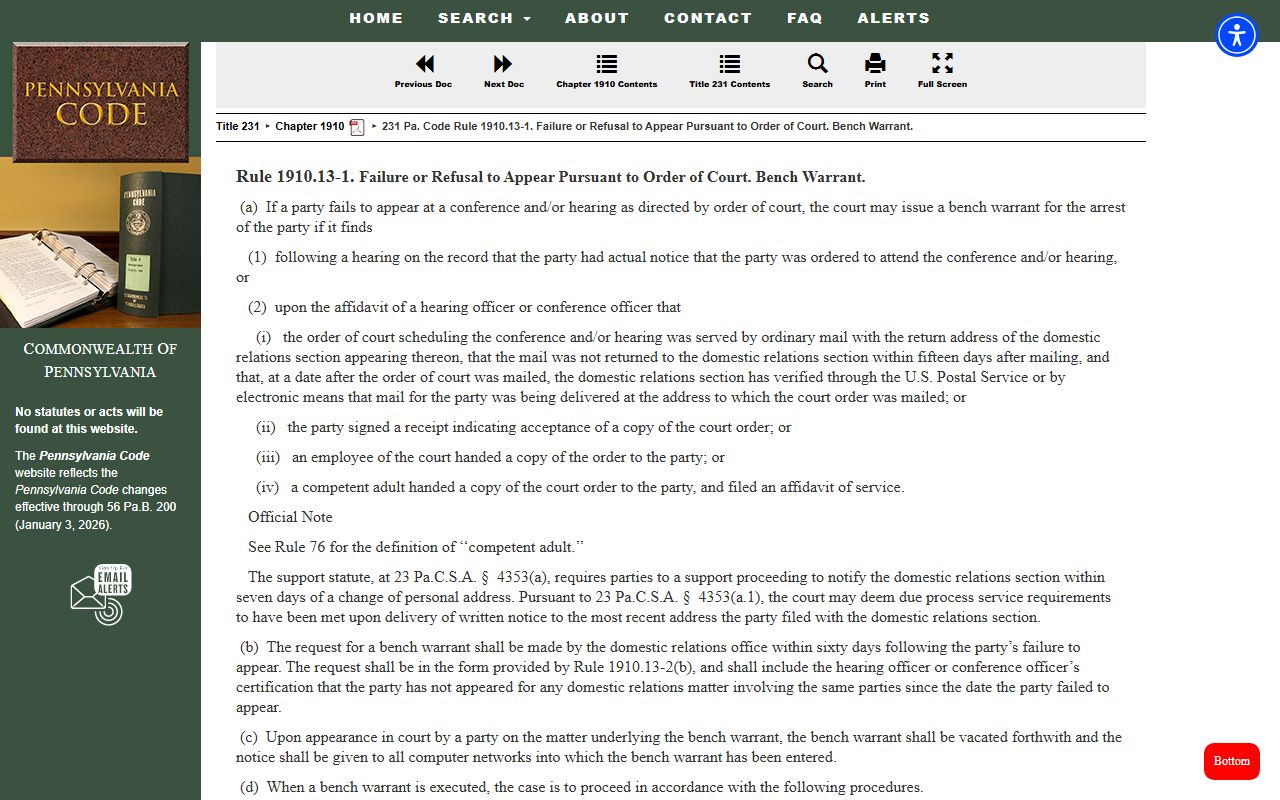
Once the person shows up in court on the support matter, the bench warrant is lifted right away. Notice goes out to all databases where the warrant was entered. A person arrested on a domestic bench warrant in Pennsylvania cannot be held longer than 72 hours before a hearing, just like other bench warrants under Rule 150. The rule applies to all domestic relations matters in Pennsylvania, including child support, spousal support, and alimony pendente lite.
Statute of Limitations and Pennsylvania Warrants
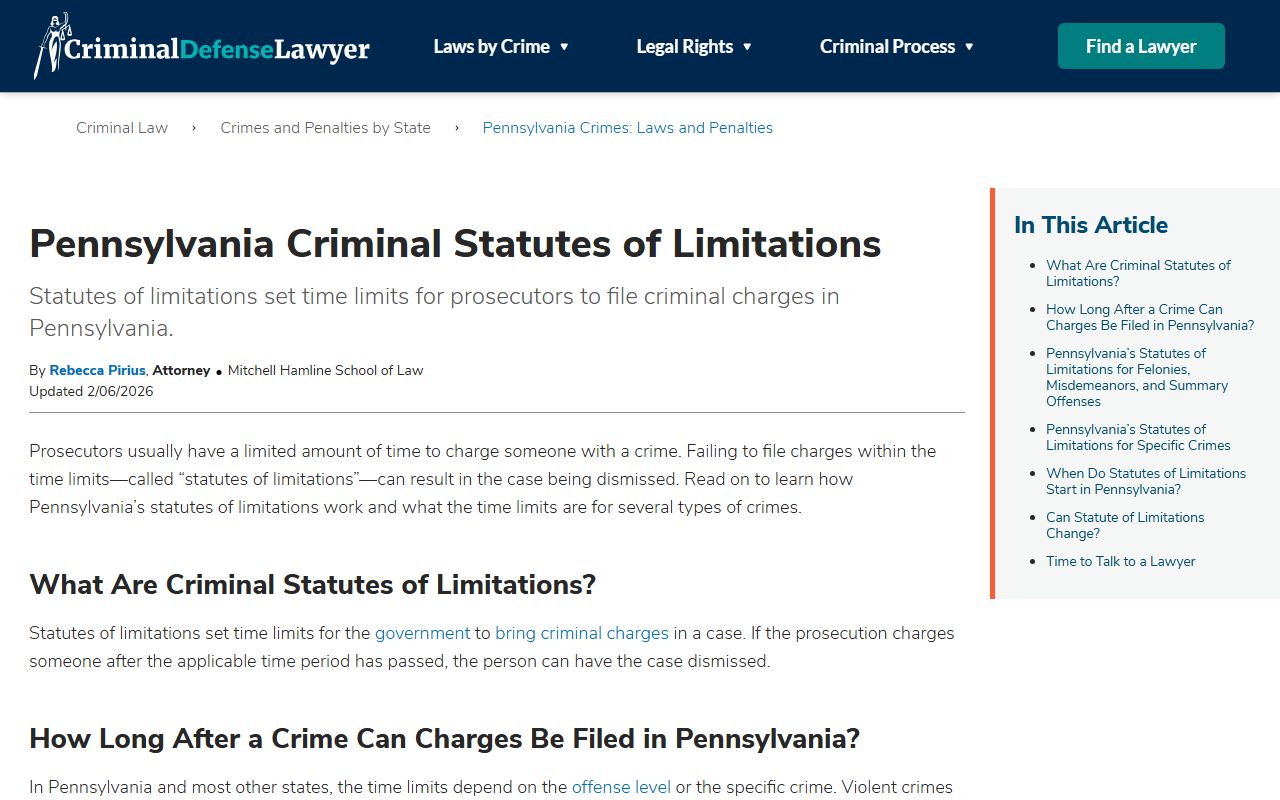
Pennsylvania sets time limits for filing criminal charges. Under 42 Pa.C.S. Section 5551, murder has no time limit. Most felonies carry a five-year limit. Misdemeanors have two years. Summary offenses may have limits as short as 30 days.
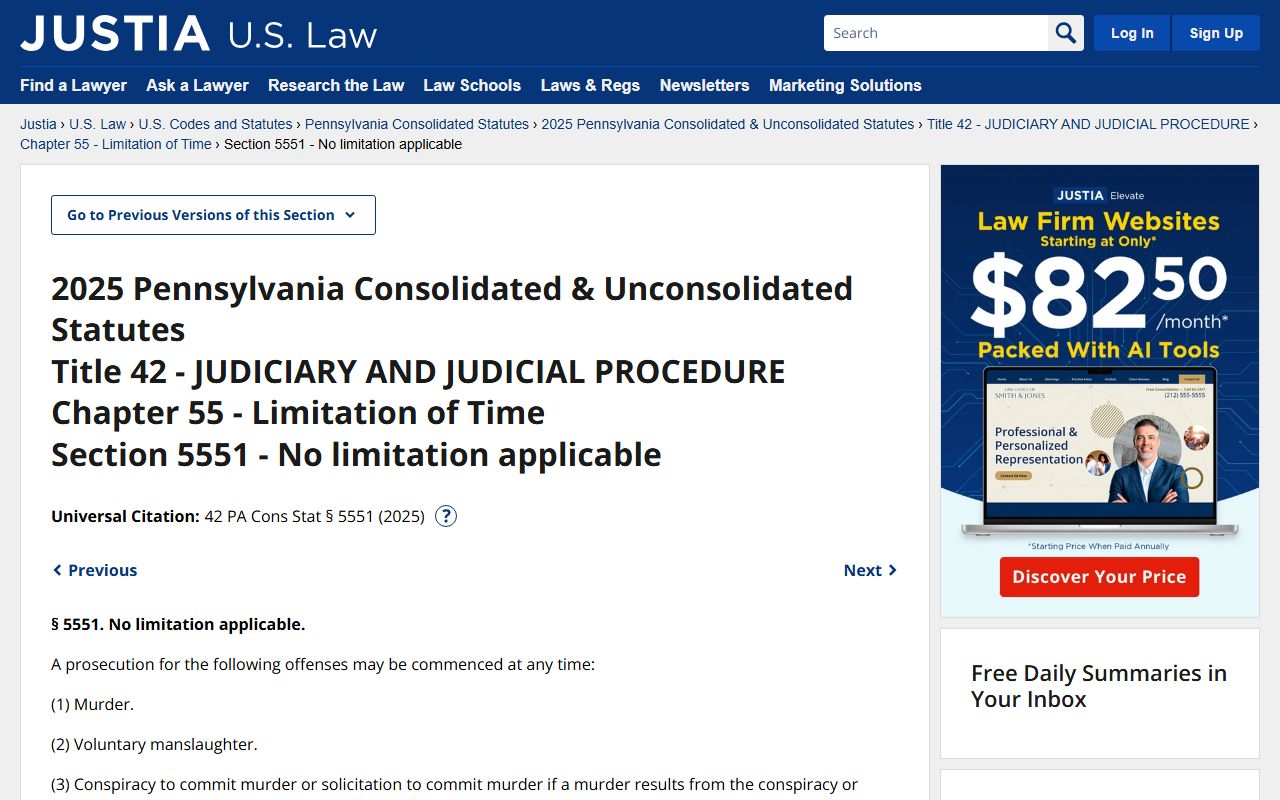
Bench warrants in Pennsylvania do not expire just because time passes. Once a bench warrant is issued, it stays active no matter how many years go by. The statute of limitations stops running once a warrant or charges are filed under 42 Pa.C.S. Section 5553. This means a bench warrant from years ago can still be valid and lead to an arrest. The Pennsylvania statute of limitations guide notes that leaving the state does not reset these clocks either. Warrants stay in state and national databases, which means bench warrants from Pennsylvania can be found during routine law enforcement stops anywhere in the country.
Executing Bench Warrants in Pennsylvania
PA Rule 513 covers how warrants are served in the state. A warrant may be served at any hour of the day or night. The person arrested must be told why they are being taken in. If arrested in the county that issued the bench warrant, they go before the local judge without delay. If arrested in a different county, a local magisterial district judge may set bail while the person waits to be moved back to the county of issuance.
Pennsylvania uses the Justice Network, known as JNET, to share warrant data across agencies. JNET gives officers access to warrant records from the State Police, the National Crime Information Center, county courts, and domestic relations offices. A bench warrant from one Pennsylvania county can lead to an arrest in any other county. The sheriff's office in each county is the main agency that serves bench warrants. They work with local police, state police, and at times federal agents to find and arrest people named in warrants.
After a bench warrant is served, the return is filed with the clerk of courts. The warrant is then closed in all databases. Once a bench warrant is carried out and the person is in custody, it is no longer valid. The president judge in each county must set up ways to track how long people are held while they wait for their bench warrant hearing in Pennsylvania.
Note: Bench warrants issued in Pennsylvania are entered into the NCIC database and can be enforced by law enforcement nationwide.
Browse Pennsylvania Bench Warrants by County
Each of the 67 counties in Pennsylvania has its own Court of Common Pleas that handles bench warrants. Pick a county below to find local resources and bench warrant information for that area.
Bench Warrants in Major Pennsylvania Cities
Residents of major cities deal with bench warrants through their county courthouse. Pick a city below to learn about bench warrant records and local court resources in that area.