
Montgomery County Warrants
Montgomery County is one of the largest counties in southeastern Pennsylvania and operates within the 38th Judicial District. The Court of Common Pleas handles all felony criminal cases and issues bench warrants for failure to appear, unpaid fines, and violations of court orders. The county seat is Norristown, and the Sheriff's Office coordinates with Norristown Police and many local departments to serve bench warrants. The Clerk of Courts maintains comprehensive records of all warrants and court proceedings.
How Montgomery County Issues Bench Warrants
A bench warrant in Montgomery County starts with a judge. When a person fails to show up for court, the judge can issue the warrant right then. The order tells law enforcement to find the person and bring them before the court. It is not a warrant for a new crime. It is a tool the court uses to make sure people follow its orders.
Montgomery County handles a high volume of criminal cases. With dozens of municipalities spread across the county, the court system stays busy. Bench warrants come from both the Court of Common Pleas and the Magisterial District Courts. The reasons are the same across all courts: missed appearances, unpaid fines, and broken conditions of release.
Under Pennsylvania Rule 430, the court must give notice before issuing a bench warrant for unpaid fines. The person gets 10 days to pay or appear. For missed court dates, no advance notice is needed. The judge can sign the warrant as soon as the person fails to show.
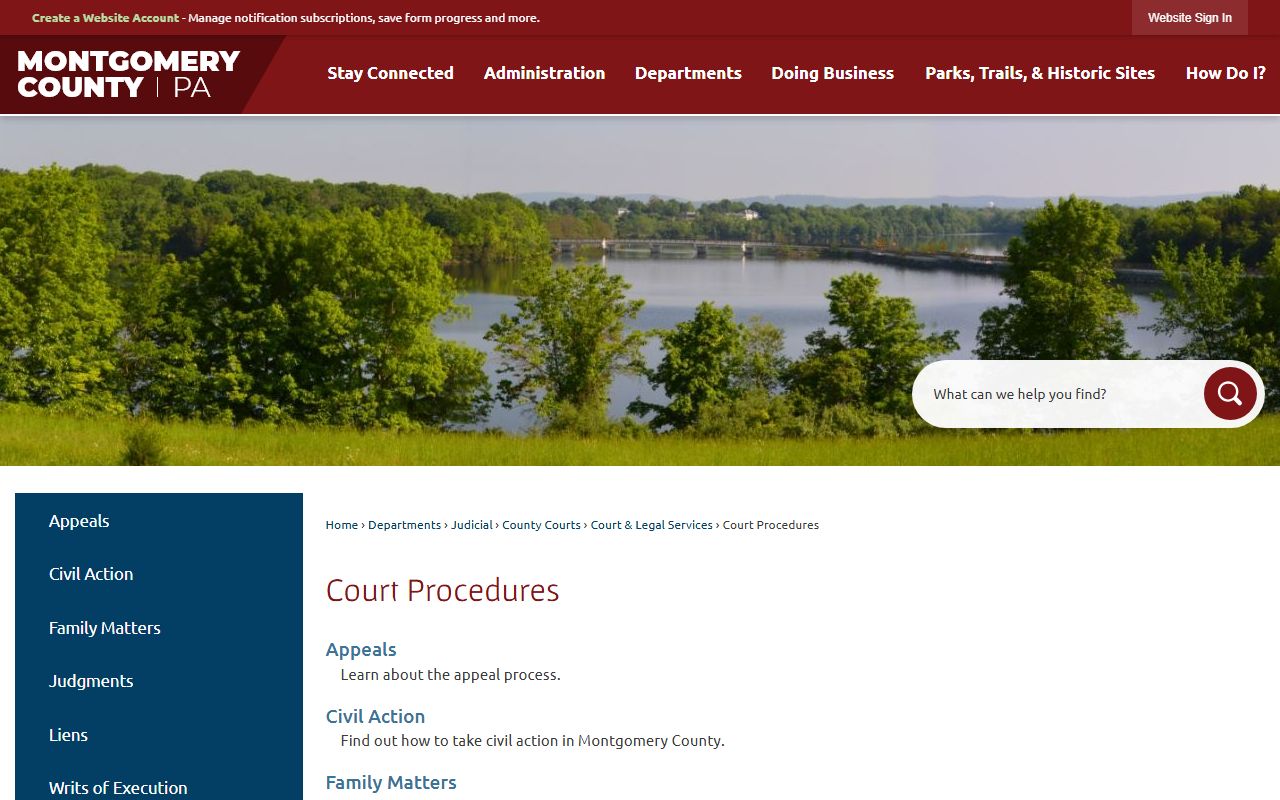
The Montgomery County government website provides access to court offices and services.

This site links to the Sheriff's Office, Clerk of Courts, and other departments that manage bench warrants in Montgomery County.
Searching Montgomery County Warrants
You can search for bench warrants in Montgomery County through the Pennsylvania UJS Portal. This free tool covers all counties in the state. Enter a name or case number to find docket sheets that show court activity, including bench warrants. The portal is available around the clock.
The Montgomery County Clerk of Courts office is another resource for record searches. This office maintains the official criminal case files. You can contact staff to ask about a bench warrant or get copies of court records.
The Clerk of Courts handles record requests and warrant status inquiries in Montgomery County.
Montgomery County bench warrants are entered into statewide databases. Any officer in Pennsylvania who runs a name check can see an active Montgomery County bench warrant. Because Montgomery County borders Philadelphia, officers from both counties frequently encounter warrants from the other jurisdiction. This broad database access makes it hard to avoid an active bench warrant for long.
Note: The UJS Portal gives you public docket data. For verified bench warrant status in Montgomery County, the Clerk of Courts office is the most reliable source.
Warrant Service in Montgomery County
The Montgomery County Sheriff's Office executes bench warrants across the county. With a large population and many towns, the Sheriff's Office works with Norristown Police and police departments in dozens of municipalities. When a judge signs a bench warrant, it goes to the Sheriff's Office for service.
Deputies search for the person named in the warrant. They may visit known addresses and check other locations. Bench warrants are also entered into state and national databases, which means any law enforcement officer who encounters the person can act on the warrant. A routine traffic stop in another part of the state could lead to an arrest on a Montgomery County bench warrant.
Once a bench warrant is served, the return is filed with the Clerk of Courts. This updates the court record. The Sheriff's Office also keeps its own records of all warrant activity. The office provides courthouse security as well, which ties into the bench warrant process when arrested individuals are brought before a judge.
Bench Warrant Hearing Rules
After an arrest on a Montgomery County bench warrant, a hearing must happen quickly. Rule 150 requires the hearing to take place without unnecessary delay. If the hearing cannot be held right away, the person goes to the county jail, and the jail notifies the court.
The hearing must occur within 72 hours. If that deadline passes on a weekend or holiday, it extends to the close of the next business day. If no hearing is held in time, the bench warrant expires by law. Montgomery County takes this rule seriously and works to schedule hearings promptly.
The judge at the hearing may take several actions:
- Set a new court date
- Modify bail or release conditions
- Address unpaid fines and set a payment plan
- Hold the person for trial if needed
- Refer the case to a treatment program
Video hearings are allowed in Montgomery County, which helps the court meet the 72-hour window. The bench warrant is vacated once the hearing ends.
Clearing Bench Warrants in Montgomery County
If you have a bench warrant in Montgomery County, dealing with it on your own terms is far better than being picked up. You can hire a lawyer to file a motion to lift the warrant. The lawyer can often arrange a hearing date so you know when to appear. This approach lets you walk into court prepared rather than be brought in after an arrest.
Going to the courthouse on your own is also an option. Judges in Montgomery County tend to respond well when a person comes in without being forced. In many cases, you will get a new court date and be allowed to leave. If fines are the issue, the judge may set up a payment plan.
Montgomery County has treatment courts and diversion programs that address issues like substance use. If the bench warrant is tied to a case involving these problems, the court may offer a path through one of these programs. Your attorney or court staff can explain what is available.
Montgomery County Court System
Montgomery County has one of the busier court systems in the state. The Court of Common Pleas handles felony and major misdemeanor cases. Multiple Magisterial District Courts are spread across the county and deal with summary offenses and preliminary hearings. Both levels of court can issue bench warrants.
The UJS Portal provides public access to records from all these courts. Docket sheets show full case histories, including bench warrants. The Clerk of Courts is the central record keeper and follows the Pennsylvania Public Access Policy. Most bench warrant information is public, though some personal details may be limited.
Montgomery County's large size and location next to Philadelphia mean the court handles a wide range of cases. The bench warrant process works the same whether the case started in a Magisterial District Court in Lower Merion or at the main courthouse in Norristown. State law governs the procedure, and every court in Montgomery County follows the same rules.
Note: Montgomery County's proximity to Philadelphia means cross-jurisdictional warrant activity is common between the two counties.