
Snyder County Bench Warrant Search
Snyder County is a small county in central Pennsylvania and part of the 17th Judicial District. The Snyder County Court of Common Pleas handles criminal cases and issues bench warrants for missed court dates and failures to comply with judicial orders. The county seat is Middleburg. The Snyder County Sheriff's Office serves warrants and coordinates with the Selinsgrove Police Department and other local agencies. Residents who want to look up bench warrants can use the Pennsylvania Unified Judicial System web portal or visit the Clerk of Courts office at the Snyder County Courthouse.
Bench Warrants in Snyder County Courts
A bench warrant in Snyder County is a court order that tells police to find someone and bring them before a judge. The Court of Common Pleas issues bench warrants for felony and misdemeanor cases. Magisterial District Judges issue them for summary offenses and preliminary hearings. Both types have the same legal force.
Pennsylvania Rule 430 governs when a bench warrant must be issued. If a person who was served in person or by certified mail does not respond to a citation or summons, the court must issue one. The rule also covers cases where someone sends a guilty plea by mail but pays less than the full fine, or where a person defaults on a payment order. Snyder County judges apply these rules consistently.
Bench warrants in Snyder County have no expiration date. They stay on file until the person shows up or a judge recalls the order.
How to Look Up Snyder County Warrants
The Pennsylvania Judiciary Web Portal is the quickest place to check. You can search by name, case number, or offense tracking number. The portal pulls data from Common Pleas and Magisterial District Courts across every Pennsylvania county, including Snyder County.
Docket sheets on the portal show the full case history. If a bench warrant was issued, it will appear in the timeline with a date. The PAeDocket app offers the same search on a phone and updates in real time. For direct help, the Snyder County Clerk of Courts office in Middleburg handles public inquiries about court records and bench warrants.
The Snyder County Sheriff's Office can confirm whether a bench warrant is active. Deputies keep files on all open warrants and can explain the process for resolving them.
Snyder County Bench Warrant Hearing Rules
After an arrest on a bench warrant in Snyder County, state law calls for a hearing without unnecessary delay. Rule 150 sets the framework. If the arrest happens within Snyder County and a hearing cannot start right away, the person is held at the county jail. The jail must inform the court promptly.
The hearing must occur within 72 hours. If that window closes on a non-business day, the deadline shifts to the close of the next business day. The issuing judge normally runs the hearing. If that judge is not available, the president judge assigns a different judicial officer. Snyder County allows video hearings, which helps speed things up.
The image below shows the Snyder County government portal, which links to court and sheriff resources.

When the hearing ends and the matter is settled, the judge must vacate the bench warrant right away. If the 72-hour limit passes with no hearing, the warrant expires by law.
Note: Video hearings in Snyder County are used at the judge's discretion and may not be available in all bench warrant cases.
Warrant Enforcement in Snyder County
The Snyder County Sheriff's Office handles bench warrant enforcement. Deputies serve warrants from both Common Pleas and Magisterial District Courts. They coordinate with the Selinsgrove Police Department and the Pennsylvania State Police for broader coverage.
Snyder County is part of the Pennsylvania Justice Network. This system shares warrant data in real time with law enforcement across the state. A bench warrant from Snyder County can be enforced in Philadelphia, Pittsburgh, or any other part of Pennsylvania. Warrants also go into national databases, meaning they can come up during contacts with police in other states.
After serving a bench warrant, the Sheriff's Office files a return with the Clerk of Courts. This creates a permanent record of the arrest in the case file.
Clearing a Snyder County Bench Warrant
A lawyer is the best first step. An attorney can file a motion to quash or lift the bench warrant with the Snyder County Clerk of Courts. This asks the judge to withdraw the warrant and set a new hearing. Judges often grant the motion when the person has a solid reason for the missed court date.
Without legal help, you can turn yourself in at the Sheriff's Office or the courthouse in Middleburg. The court must hold a hearing within 72 hours. At the hearing, the judge may release you on bail, add conditions, or set the next court event.
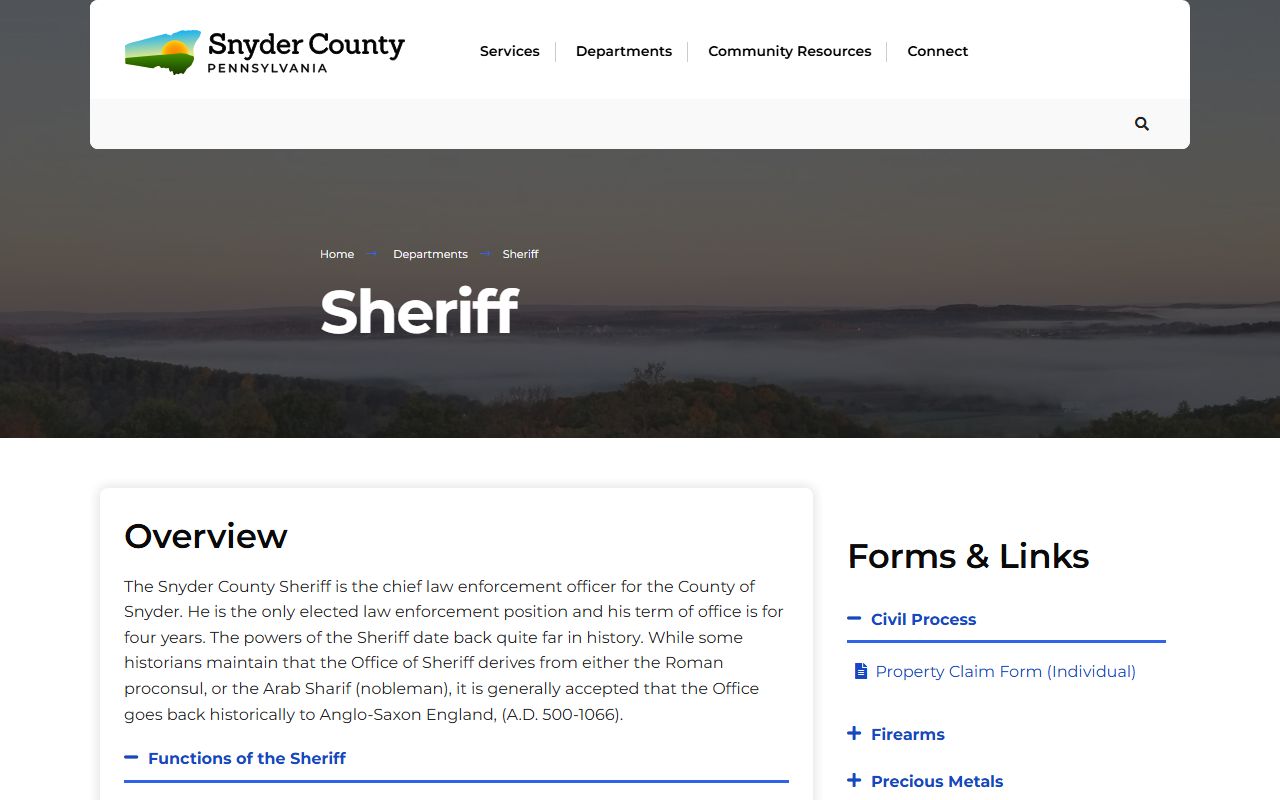
This screenshot shows the Snyder County Sheriff's Office website, where bench warrant information is available.
Snyder County bench warrants do not expire. The longer a person waits, the harder it is to show the court they take the matter seriously. Voluntary action always carries more weight than being picked up by police.
- Hire a criminal defense lawyer for advice
- File a motion to quash through the Clerk of Courts
- Turn yourself in at the Sheriff's Office as a last resort
- Bring identification and all court documents
- Act quickly to show the court good faith
Snyder County Public Records Access
Court records in Snyder County are public unless sealed by a judge. The Clerk of Courts keeps criminal case files at the Middleburg courthouse, including bench warrant orders and returns. Certified copies cost a fee.
The UJS portal gives free online access to docket sheets. These records show every event in a case, from filing to final disposition. Bench warrants that were issued and later vacated appear in the record. Snyder County follows the Public Access Policy of the Unified Judicial System, balancing open records with protections for sensitive personal data.
Note: Some older Snyder County records may only be available in paper form at the Clerk of Courts office.