
Mifflin County Court Warrants
Mifflin County operates within the 49th Judicial District in central Pennsylvania. The Court of Common Pleas in Mifflin County issues bench warrants for missed court appearances and violations of court orders. Lewistown is the county seat, and the Sheriff's Office works with Lewistown Police to carry out warrants. The Clerk of Courts keeps all bench warrant records, and these records are accessible through the state court portal. Mifflin County follows the same bench warrant rules as every other county in the state.
Bench Warrants in Mifflin County
Judges in Mifflin County issue bench warrants when someone fails to appear in court. The order goes straight from the judge's bench to law enforcement. It tells officers to find the named person and bring them to the courthouse. This is different from an arrest warrant, which is tied to a new criminal case.
Common reasons for bench warrants in Mifflin County include missing a court hearing, not paying fines or restitution, and failing to report for sentencing. Rule 430 of the Pennsylvania Code requires that the court give written notice before a bench warrant is issued for unpaid fines. The person must get 10 days to respond. If they do not, the judge may then sign the bench warrant.
Once issued, a Mifflin County bench warrant has no end date. It stays on the books until the person comes before the court or the judge pulls it back.
The Mifflin County government site offers links to offices involved in the bench warrant process.

County departments listed here can help with court records and warrant questions in Mifflin County.
How to Search Mifflin County Warrants
The Pennsylvania UJS Portal is a free online tool for looking up court records in Mifflin County. You can search by name or case number. Each case has a docket sheet that shows all court activity, including bench warrants. The portal covers the Court of Common Pleas and the Magisterial District Courts in Mifflin County.
The Mifflin County Clerk of Courts can also help. This office keeps the official file for every criminal case. You can call or visit to ask about the status of a case or whether a bench warrant is active. Staff can check records and provide copies if needed.
Mifflin County shares warrant data with other agencies through state databases. Any officer in the state can see an active Mifflin County bench warrant when they run a name check. This is one reason why it is smart to deal with a bench warrant rather than hope it will not come up.
Note: Docket sheets on the UJS Portal are updated regularly, but you should contact the Clerk of Courts in Mifflin County for the most current information.
Sheriff's Office and Warrant Enforcement
The Mifflin County Sheriff's Office carries out bench warrants. Deputies receive the warrant from the court and work to locate the person named in it. They may check known addresses, workplaces, and other locations. The office also partners with Lewistown Police and nearby agencies to track down people with active warrants.
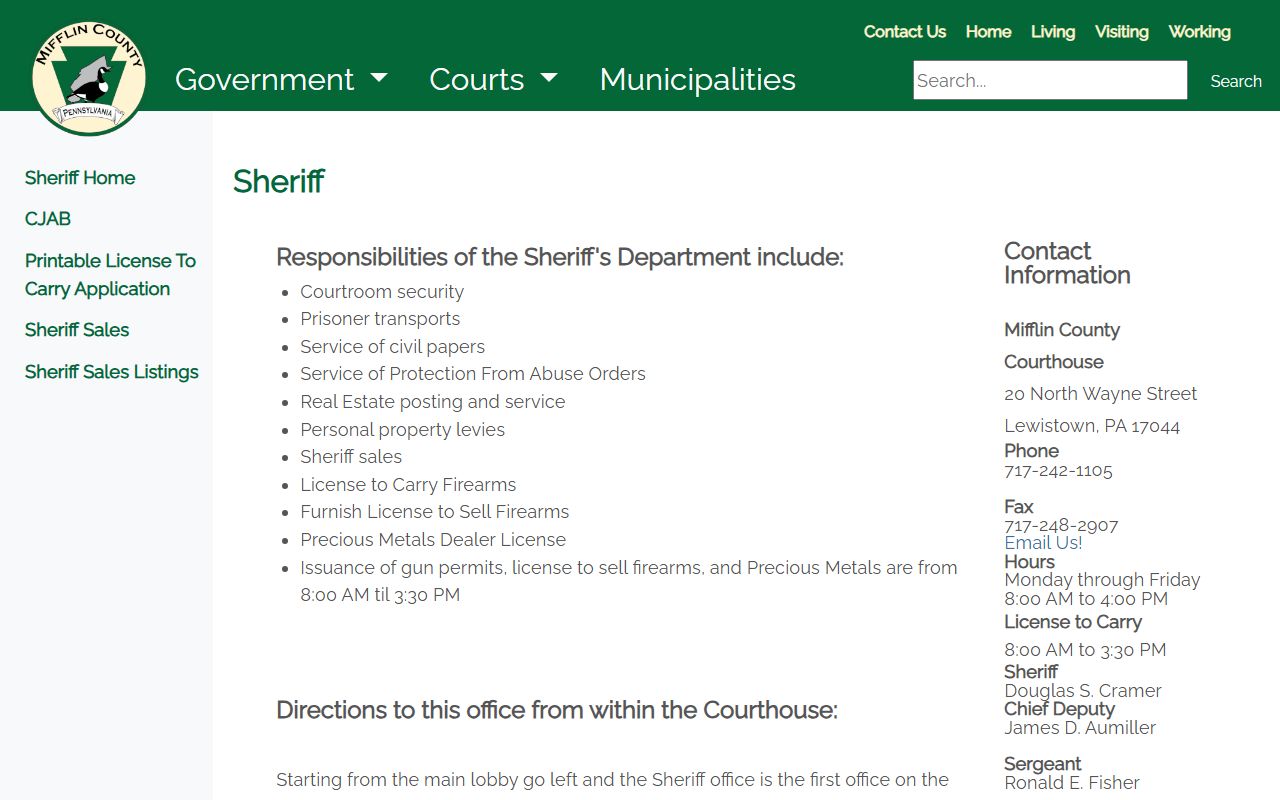
The Sheriff's Office handles warrant service and courthouse security in Mifflin County.
Bench warrants from Mifflin County are entered into the Pennsylvania State Police database. This makes the warrant visible to every law enforcement agency in the state. Some warrants also go into national systems, which means a person could be picked up in another state on a Mifflin County bench warrant.
Once the warrant is served, the return goes to the Clerk of Courts. This keeps the case file up to date and creates a record of when the person was brought in. The Sheriff's Office also logs every warrant action in its own files.
After a Bench Warrant Arrest
A person arrested on a Mifflin County bench warrant is taken to the county jail if a hearing cannot happen right away. Under Rule 150, the hearing must take place within 72 hours. The jail notifies the court as soon as the person arrives, and the court sets the hearing.
The judge who issued the bench warrant usually handles the hearing. If that judge is not available, another judge in Mifflin County can step in. Video hearings are also allowed, which can speed up the process. At the hearing, the judge looks at the reason for the bench warrant and decides what comes next.
Possible outcomes at a Mifflin County bench warrant hearing include setting a new court date, changing bail conditions, addressing overdue fines, or moving the case forward. The judge lifts the bench warrant once the hearing is complete. If the hearing does not happen within 72 hours, the bench warrant expires under state law.
Resolving a Mifflin County Warrant
If you have an active bench warrant in Mifflin County, it is better to take action than to wait. You can hire a lawyer to file a motion to lift the warrant. The lawyer can often get a hearing scheduled so you know what to expect. This also shows the court that you take the matter seriously.
Another option is to go to the Mifflin County courthouse and turn yourself in. While this can be stressful, judges tend to view it as a good sign. Many people who turn themselves in are given a new court date and allowed to leave. The judge may also set up a payment plan for any unpaid fines.
Mifflin County has treatment court options for people dealing with substance use or similar issues. If the bench warrant is linked to a case where those factors played a role, the court may refer you to one of these programs. Your lawyer or the court staff can explain what is available in Mifflin County.
The Mifflin County government website lists court services that may help you resolve a bench warrant.
Mifflin County Public Records
Bench warrant records in Mifflin County are public. Anyone can look up a docket sheet through the UJS Portal to see court activity on a case, including bench warrants. The Clerk of Courts office can also help with in-person searches and provide certified copies of records.
Mifflin County follows the Pennsylvania Public Access Policy when it comes to sharing court data. Most information on bench warrants is available to the public. However, some personal details may be kept private under the policy. The Clerk can explain what is available and what may be restricted.
Whether you are looking for your own records or checking on a case in Mifflin County, the combination of the online portal and the Clerk of Courts office gives you two clear paths to find what you need.
Note: Court records in Mifflin County may be stored in both paper and electronic formats, so some older bench warrant records might take longer to locate.