
Elk County Bench Warrant Search
Elk County is a small, rural county in north-central Pennsylvania and part of the 30th Judicial District. Bench warrants in Elk County are issued when a person does not appear in court or breaks the terms of a court order. The Court of Common Pleas and Magisterial District Courts both handle these cases. Searching for bench warrants in Elk County can be done through the UJS Portal, which provides access to court docket sheets and case records from across the state. The Clerk of Courts and the Sheriff's Office are also helpful resources.
How Elk County Bench Warrants Are Issued
A judge in Elk County can issue a bench warrant when a person fails to show up for a court hearing. The order goes to law enforcement, and officers then have the right to arrest the named person at any time. Bench warrants are different from other types of warrants. They are not tied to a new crime. They are about the court's need to make sure people follow through on their cases.
Under Pennsylvania Rule 150, anyone picked up on a bench warrant must get a hearing without needless delay. If the hearing cannot happen right away, the person stays at the county jail. The jail must let the court know the person is there. A strict time limit applies. The court must hold the hearing within 72 hours or by the close of the next business day.
The rules under Pennsylvania Code Rule 430 lay out when a bench warrant shall or may be issued in summary cases. This includes cases where a person was served by certified mail but did not respond.
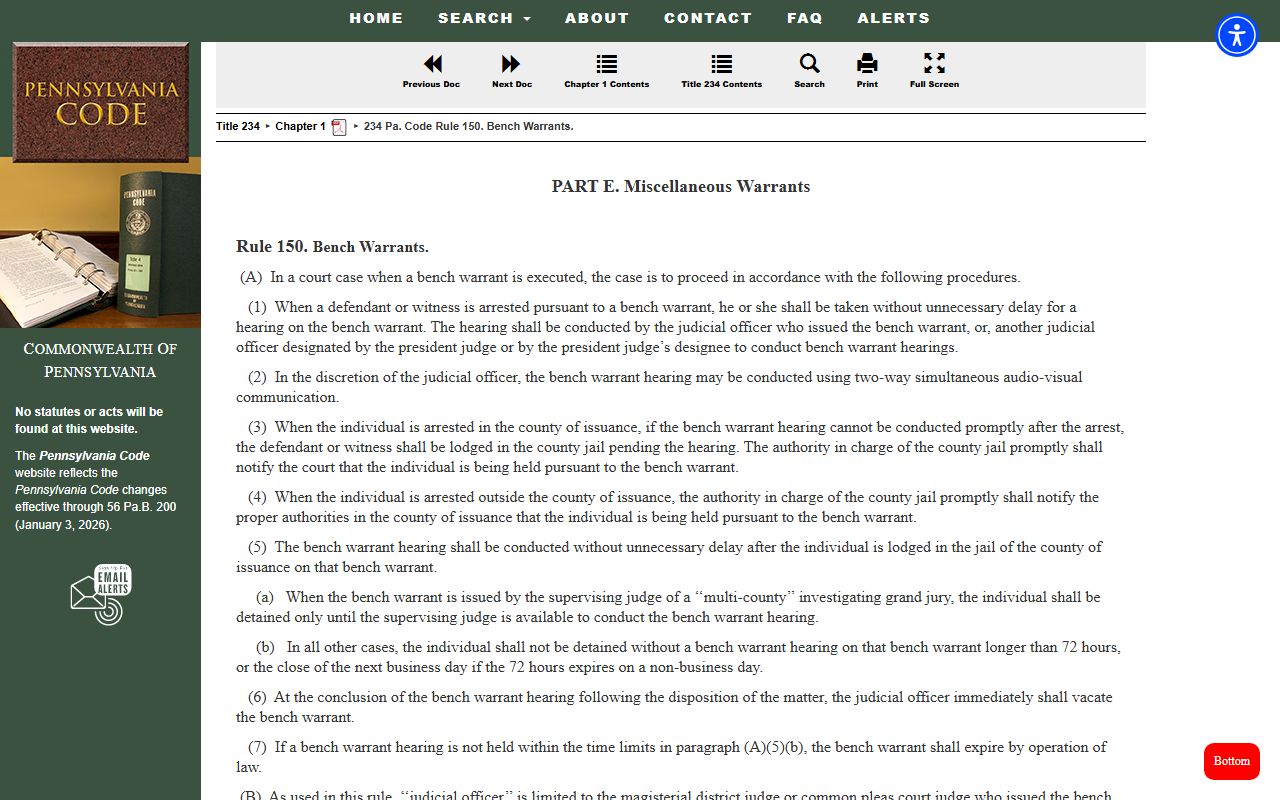
This state-level rule applies in Elk County just as it does in all other Pennsylvania counties.
Elk County Sheriff and Warrants
The Elk County Sheriff's Office is the agency that serves bench warrants in the county. Deputies carry out orders from the Court of Common Pleas and from Magisterial District Courts. The office keeps files of all active warrants and works with local police and state agencies to find people who have warrants.
When a bench warrant is served, the deputy files a return with the Clerk of Courts. The person is then brought before the judge for a hearing. Elk County enters bench warrants into state law enforcement databases. This means an officer in another county can see the warrant during a routine check.
The Sheriff's Office also provides courthouse security and handles civil matters. In a county as small as Elk, the office often works closely with surrounding counties to assist with warrant execution. You can call the office to ask about a warrant's status.
Note: Elk County bench warrants are listed in statewide databases and can lead to arrest anywhere in Pennsylvania.
Searching for Bench Warrants in Elk County
The best way to search for Elk County bench warrants is through the Pennsylvania Judiciary Web Portal. This free online tool lets you look up public docket sheets by name, case number, or offense tracking number. It covers courts in all 67 counties.
The Elk County Clerk of Courts keeps all criminal case records. You can visit the office in person or call during business hours to ask about a specific case. Certified copies of records are available upon request.
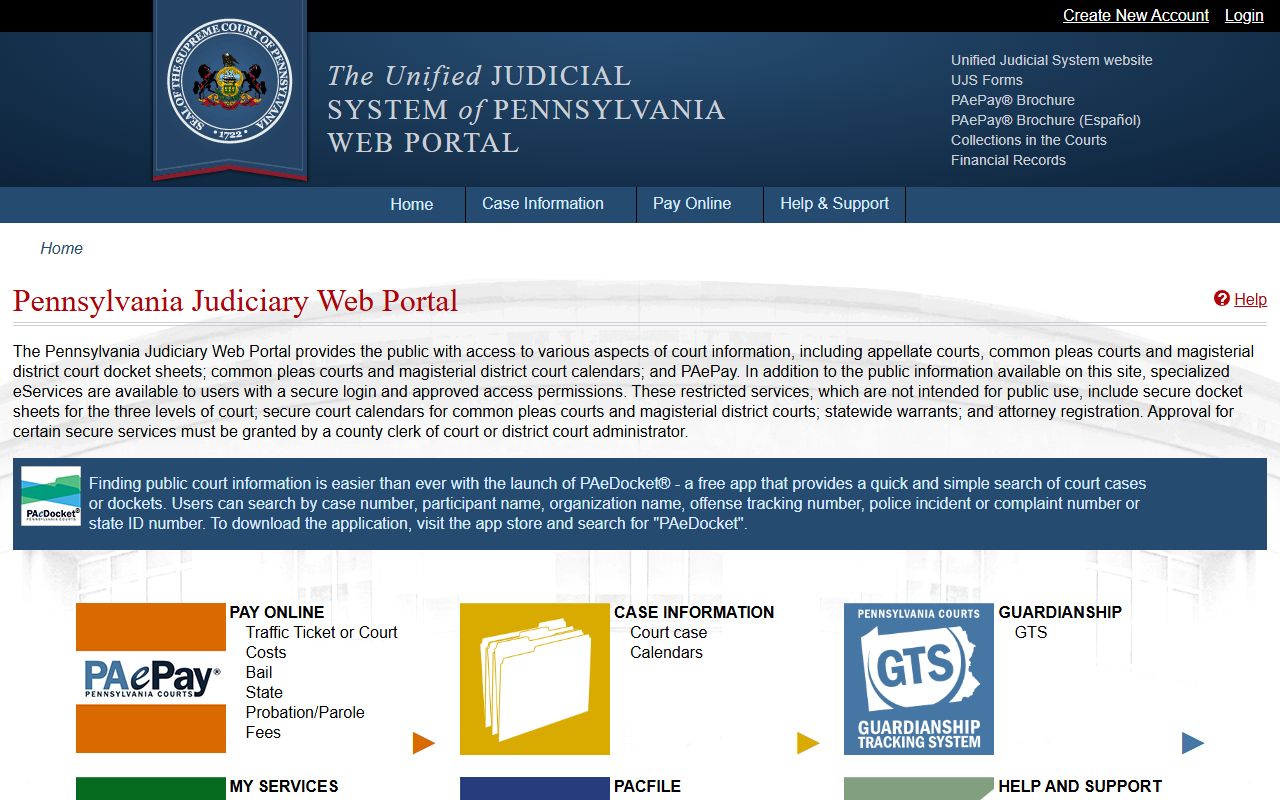
The MDJS system tracks cases at the lower court level. Many bench warrants start in Magisterial District Courts, especially for summary offenses. Access to these records is also available through the UJS Portal.
- UJS Portal for statewide docket sheet and case searches
- Clerk of Courts for local records and certified copies
- Sheriff's Office for active warrant verification
- MDJS for Magisterial District Court cases
Common Causes of Bench Warrants in Elk County
The top reason for bench warrants in Elk County is failure to appear. A person who gets a citation or summons and does not respond is at risk of having a warrant issued. Under state rules, the court must take certain steps first. For unpaid fines, a notice is sent. The person then has 10 days to pay or appear before a bench warrant can be signed.
Other reasons include breaking the terms of a court order or not starting a jail sentence on the assigned date. Elk County also offers treatment court programs, and missing required meetings or sessions can result in a bench warrant. The court sees the warrant as a tool to bring people back into the process, not as a form of punishment on its own.
How to Address an Elk County Bench Warrant
If you have a bench warrant in Elk County, it is important to act quickly. You can hire a lawyer to file a motion asking the judge to lift the warrant. The Clerk of Courts processes these motions. If the judge agrees, the warrant is removed and a new court date is set.
Turning yourself in at the courthouse or the Sheriff's Office is another option. As noted in legal guides on Pennsylvania bench warrants, coming forward on your own can show the court you want to comply. The 72-hour hearing rule still applies. After the hearing, the judge vacates the bench warrant and decides how to move the case forward.
Ignoring a bench warrant is not a good plan. It stays active with no end date. An arrest can happen at any time, whether during a traffic stop, a visit to a government office, or even at home. The Cornell Law reference for Rule 150 explains the full process and time limits in plain language.
Note: If the court does not hold a bench warrant hearing within 72 hours, the warrant expires under Pennsylvania law.
Elk County Court System
Elk County is part of the 30th Judicial District. The Court of Common Pleas is based in Ridgway, the county seat. The county also has Magisterial District Courts for lower-level cases. These courts handle preliminary hearings, summary offenses, and civil claims.
The Clerk of Courts is the official record keeper for all criminal cases. Public access follows Pennsylvania's statewide rules. Records are kept in both digital and paper form. The county follows the same bench warrant procedures as every other county, guided by the state criminal procedure code.