
Cambria County Bench Warrants
Cambria County bench warrants are issued by judges in the 43rd Judicial District when a person fails to appear for a scheduled court date. The county seat is in Ebensburg, and the Court of Common Pleas handles all felony and misdemeanor cases in Cambria County. Searching for active bench warrants in Cambria County can be done through court offices or online tools. These warrants stay active until the court recalls them or the person is found. Cambria County residents should know how to check for open warrants tied to their name.
How Bench Warrants Work in Cambria County
A bench warrant in Cambria County is a court order that tells law enforcement to bring a person before a judge. The most common reason is a failure to appear. If you miss a court date in Cambria County, the judge can issue a bench warrant the same day. This type of warrant is different from an arrest warrant because it comes from the judge's bench, not from a police investigation.
Under Pennsylvania Rule of Criminal Procedure 150, anyone arrested on a bench warrant must be taken to a hearing without unnecessary delay. In Cambria County, this hearing is held by the judge who issued the warrant or by another judge assigned by the president judge. The rule sets a strict 72-hour limit on how long a person can be held before this hearing takes place.
Bench warrants in Cambria County can also be issued for failure to pay fines or for violating a court order. These warrants do not expire on their own. They remain in the system until the court takes action to remove them.
Cambria County Warrant Search Options
The Cambria County government website provides links to court offices and departments that handle warrant records. The Cambria County Court of Common Pleas is part of the 43rd Judicial District, and its records are available through several channels.
The screenshot below shows the Cambria County government portal, which connects residents with court and law enforcement services across the county.

For online searches, the Pennsylvania Unified Judicial System web portal lets users look up docket sheets for criminal cases filed in Cambria County. You can search by name, case number, or offense tracking number. The portal covers both Common Pleas and Magisterial District Court cases.
Cambria County also has Magisterial District Courts that handle preliminary hearings and summary offenses. Bench warrants issued at this level appear in the statewide system as well.
Cambria County Sheriff and Warrant Execution
The Cambria County Sheriff's Office is responsible for executing bench warrants in the county. When a judge issues a bench warrant, the Sheriff's Office enters it into state databases and begins the process of locating the named person.
This image shows the Cambria County Sheriff's Office page, which handles warrant execution and verification for the county.
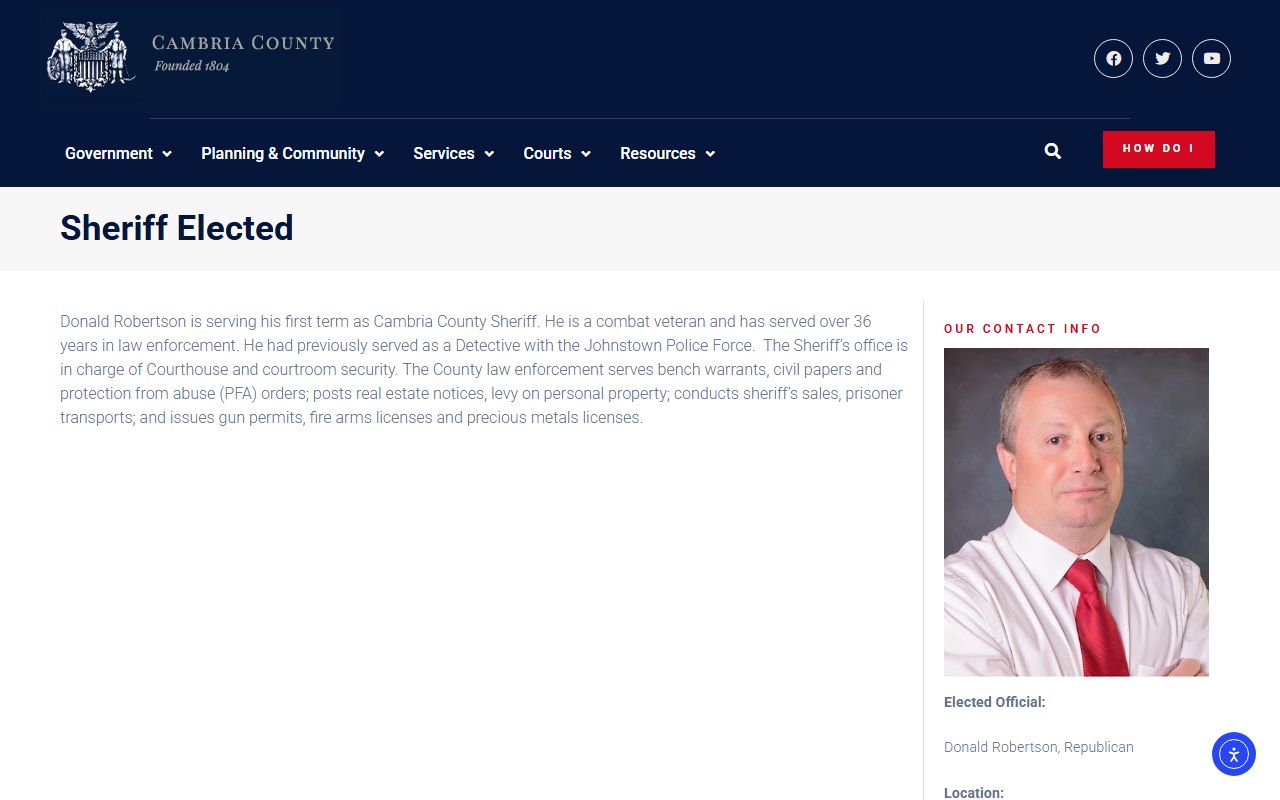
The Sheriff's Office works with the Johnstown Police Department and other local agencies to serve warrants. Once a bench warrant is entered into the system, any law enforcement officer in the state can act on it during a routine stop or other encounter. Warrant returns are filed with the Cambria County Clerk of Courts.
Note: Cambria County bench warrants entered into state databases can be enforced by any law enforcement agency in Pennsylvania.
Bench Warrant Records at the Cambria County Clerk
The Cambria County Clerk of Courts is the official custodian of all criminal case records. This includes bench warrant records, docket sheets, and case dispositions. The office provides public access to these records in line with the Pennsylvania Public Access Policy.
Below is a look at the Cambria County Clerk of Courts office, where motions to lift bench warrants are processed and criminal records are maintained.
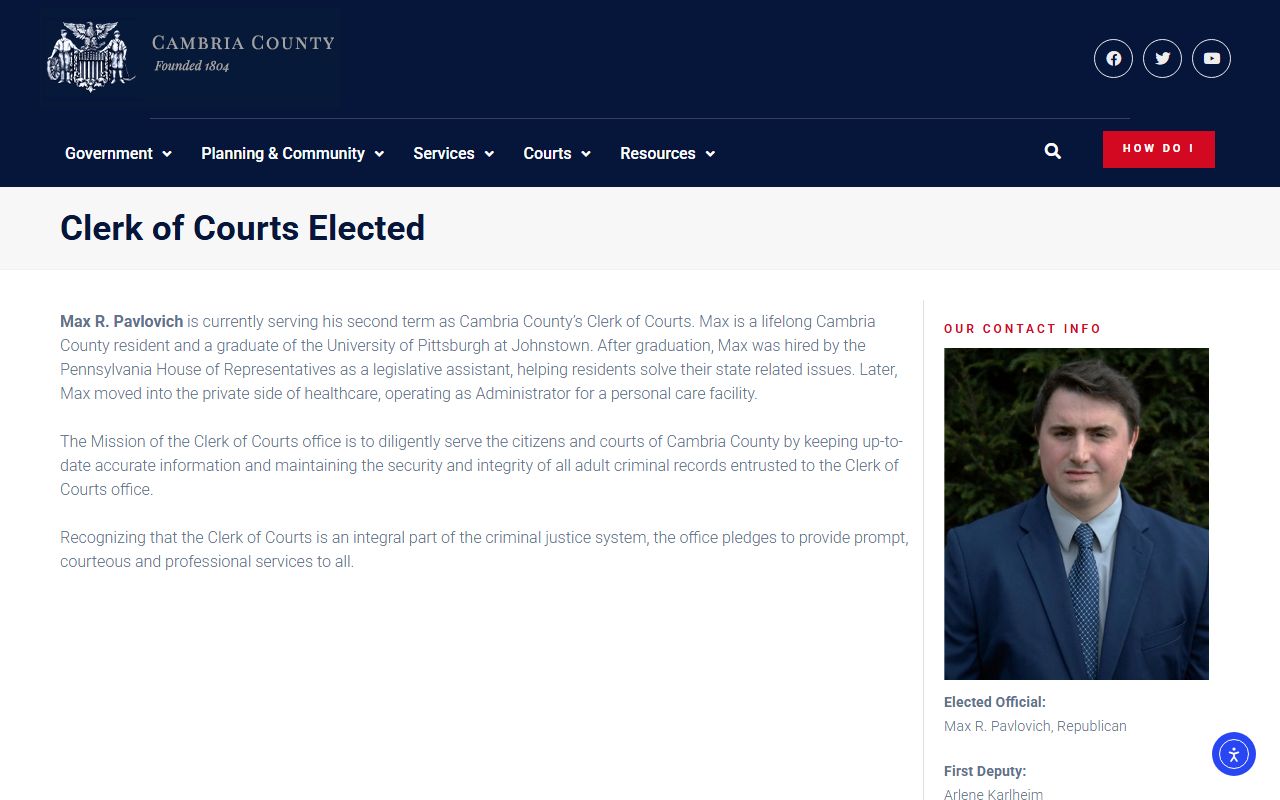
Certified copies of court documents are available from this office. If someone wants to file a motion to lift a bench warrant in Cambria County, the paperwork goes through the Clerk of Courts. Staff can assist with basic record searches during business hours.
Searching Cambria County Court Dockets Online
Cambria County bench warrants remain active until they are either executed or recalled by the issuing judge.
This screenshot shows the Cambria County court records search tool used to find bench warrant information and case dockets.
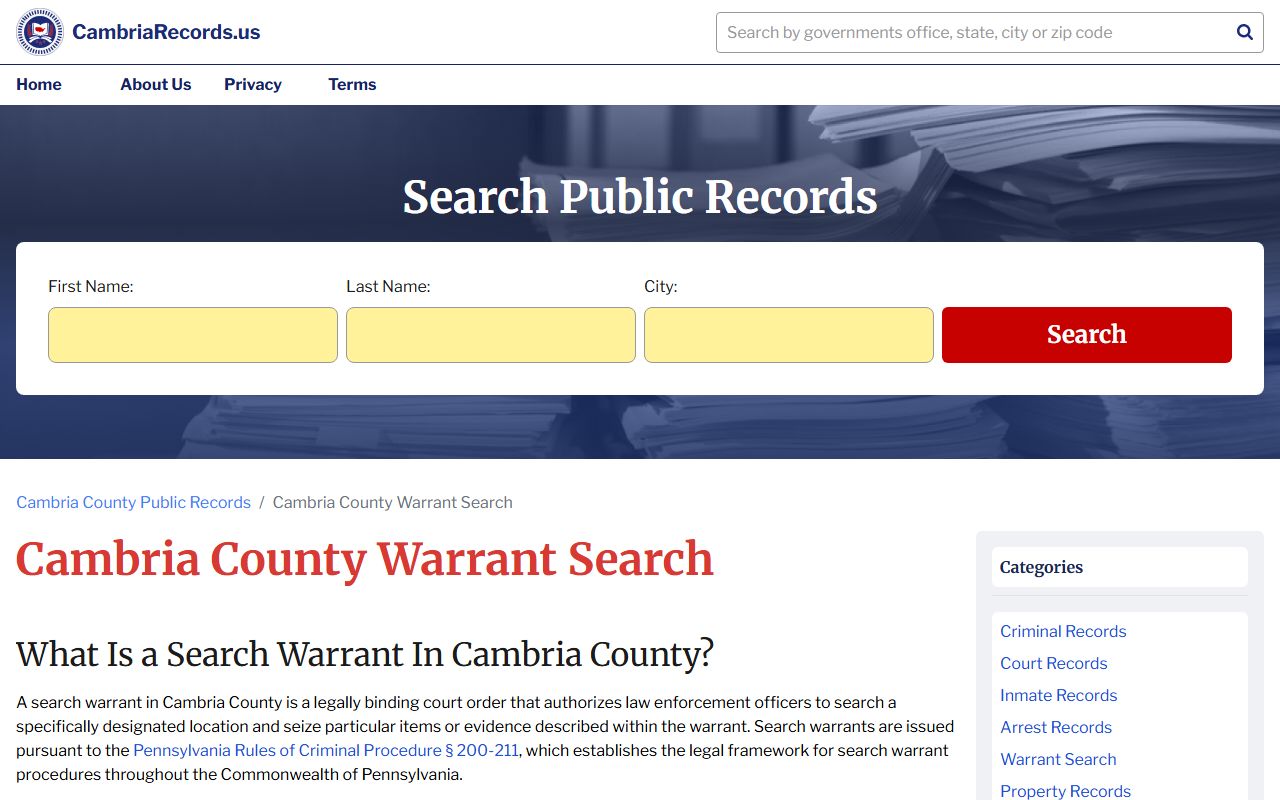
Under Pennsylvania law, a person arrested on a Cambria County bench warrant must receive a hearing within 72 hours. If the hearing does not happen within that window, the warrant expires by operation of law as stated in Rule 150. The MDJS system also provides access to summary case information from Magisterial District Courts in Cambria County.
Individuals with open bench warrants in Cambria County may be arrested during any encounter with police. This includes traffic stops, routine checks, or visits to government offices.
Resolving a Bench Warrant in Cambria County
The best way to resolve a bench warrant in Cambria County is to appear before the court voluntarily. An attorney can often help arrange a surrender date. The judge who issued the warrant will hold a hearing to decide what happens next.
According to legal guidance on Pennsylvania bench warrants, acting quickly is key. The longer a bench warrant sits open, the more problems it can cause. Cambria County courts may set new bail conditions or reschedule the missed hearing.
During the bench warrant hearing, the judge reviews why the person failed to appear. Valid reasons like a medical emergency may lead to lighter consequences. The judge will then vacate the bench warrant and set a new court date. Cambria County treatment courts are also available for cases involving substance use or mental health issues.
- Contact the Cambria County Clerk of Courts for your case status
- Speak with an attorney about filing a motion to lift the warrant
- Appear voluntarily to avoid arrest at an unexpected time
- Bring any documentation that explains the missed court date
- Check the UJS portal for your docket information before going to court
Note: Voluntary surrender on a Cambria County bench warrant often results in more favorable treatment by the court than being arrested.